Heat Transfer and Temperature Control —— The Foundation of Reaction Stability
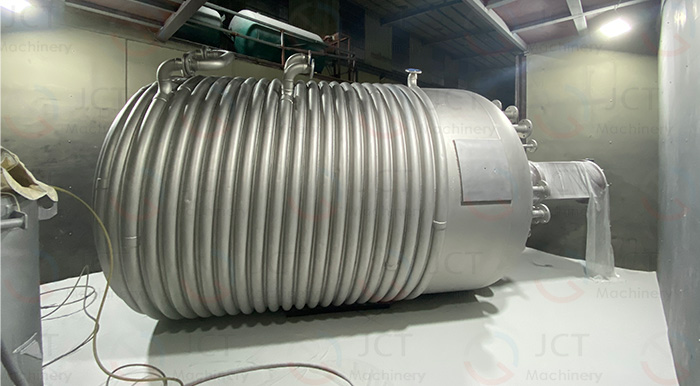
- Double-layer heat exchange: External jacket + internal pupe coil improves heat transfer efficiency, shortens ramp times and minimizes temperature gradients.
- Zone-based temperature control: Divided the reactor into several temperature control circuits (bottom/side tray/top tray/paddle). This is particularly important for reactions that are exothermic or require staged heating.
- Efficient heating medium: Thermal oil system (up to 300℃ or above) or steam/low-pressure hot oil. Design an appropriate heat transfer area (㎡) and allow margin for heat release.
- Temperature sensor placement: At least three temperature points (bottom, center and jacket reflux). Turbines/thermocouples can be used at key points to detect local hot spots.
- PID and auto-tuning control: Utilize PID temperature control with feedforward/auto-tuning. For highly exothermic reactions, fast response algorithms and overshoot suppression are required.
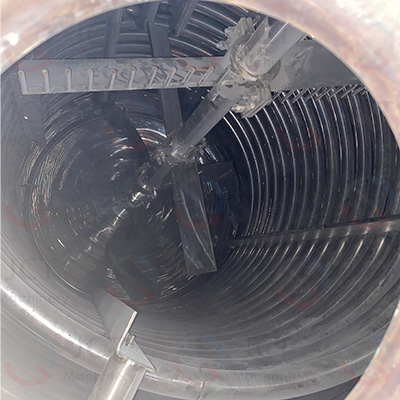
Mixing and Mass Transfer —— Avoiding Localized Inhomogeneities and Coking
- Agitator selection:
- For low/medium viscosity: paddle, anchor or impeller.
- For medium/high viscosity: twin planetary, twin ∑-shaped blade.
- For dispersion requirements: use a high speed disperser or emulsifier.
- Clearance between paddle and cylinder: Maintain an appripriate clearance (e.g., 0.5-1% of the groove diameter for anchor types) to reduce buildup, but avoid excessive clearance that can lead to seizures.
- Shear and circulation: Design paddles that promote longitudinal/radial circulation. If necessary, connect a circulating pump (external circulation) in series to improve heat transfer and uniformity.
- Local heating/cooling paddles: Use hot oil or internal cooling channels to improve heat transfer directly around the paddles, if necessary.
Vacuum, Condensation and Solvent Recovery (Especially Critical for Desolventization/Dehydration Processes)
- High-efficiency condenser and recovery system: Ensures solvent condensation rate, reduces waste and odor, saves costs, and meets environmental requirements.
- Vacuum system design: Pump stage configuration (roots+water ring/vortex) with anti-backflow and automatic valve protection.
- Online residual solvent/water monitoring: Facilitates reaction termination at the target solids/water content, preventing side reactions caused by excessive desolventization.
Material Inlet/Outlet and Dosing Methods (Controlling Step Effects)
- Multiple precision dosing ports: Liquids, solvents and catalysts can be added at separate points (with flowmeters/mass flowmeters available) to avoid localized overheating or runaway caused by all-in addition.
- Premixing and dilution system: Premixes high-risk or highly exothermic materials and adds them to the main reactor with minimal disturbance.
- Automated proportional dosing and recording: Supports batch traceability (weighing/flow recording).
Instrumentation, Control and Data Acquisition (To Ensure Controllability and Traceability)
- Key online monitoring: Temperature (multiple points), pressure, vacuum, speed, motor power (for viscosity estimation), flow rate, and liquid level.
- Failure protection logic: Automatically shut down the reactor and trigger cooling or venting procedures when temperature/pressure exceeds the limit.
- PLC+HMI: Enables recipe management, batch tracking, trend curves and alarm history.
- Soft sensors: Utilize power, speed and temperature to estimate viscosity trends, providing early warning of mixing difficulties or excessive solids content.
Materials, Surface Treatment and Anti-contamination
- Material selection: For halogenated/acidic intermediates, use SS316 or higher alloys. Glass-lined lining or nickel alloys may be used for corrosion protection if necessary.
- Surface roughness control: Mirror-polished interior surfaces (Ra ≤ 0.8μm) reduce buildup and facilitate cleaning.
- Seals and flanges: Mechanical seals/aortoght flanges reduce the risl of volatilization and leakage. For highly viscous materials, choose large-diameter flanges for easier discharge.
Maintenance, Cleaning and Operability
- CIP (Clean-in-place) Ports: Designed with CIP spray balls and flush ports for quick switching between production lines.
- Removable/Quick-access Parts: Bearing seats and propellers are replaceable, minimizing maintenance downtime.
- Ergonomics: Observation/sampling ports, elevated platforms, safety railings, and a strategically placed operating area.
Process Optimization and Process Measures (Engineering to Process Coordination)
- Step-by-step feeding and temperature control curves: Design and record standardized heating/holding/cooling curves; perform heat balance analysis for highly exothermic reactions.
- Pre- and post-processing division: Separate high-shear pre-treatment (pre-dispersion) and post-concentration into separate equipment to reduce the load on each reactor.
- Exothermic testing and scale-up verfication: Use a heat flow meter/calorimeter to measure the heat release rate (kJ/kg·s) for adjusting the heat exchange area and controller parameters.
By integrating internal pipe coil/zone heating, targeted agitators, precise online monitoring, vacuum and condensate recovery systems, and comprehensive safety protection into reactor designs, JCT can provide stable, controllable, and high-yield reactor solutions for various adhesive reactions (polycondensation, solution polymerization, and high-solids concentration, etc.), significantly improving product consistency and reducing energy consumption and operational risks.


 JCT
JCT
 Oct 20,2025


 Home
Home Detailes Explanation Of EVA Hot Melt Glue Production Line
  +86 18138373963
 jctben@mixmachinery.com


