
Leading Glue Production Line Equipments Manufacturer.
Tel: +86 181 3837 3963 | jctben@mixmachinery.com
Tel: +86 181 3837 3963 | jctben@mixmachinery.com

 JCT
 Nov 04,2026

A pillow hot melt glue production line requires raw material handling equipment, industrial mixers, heating and transfer systems, a hot melt glue pillow packing machine, and auxiliary equipment. The configuration depends on the adhesive formulation, production capacity, packaging size, and required automation level.
For manufacturers producing pillow-packaged hot melt adhesive, the process involves preparing and mixing raw materials, heating the adhesive, transferring it to the filling system, and packaging the molten adhesive into individual pillow-shaped packs. Each stage must work together to maintain stable material flow, accurate filling, and consistent packaging quality.
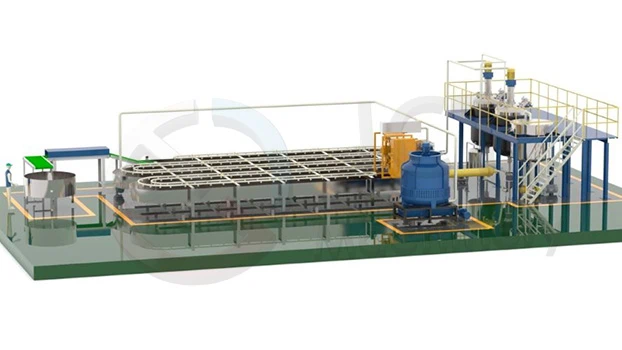
Raw material handling equipment is used to store, weigh, and feed ingredients into the mixing system according to the adhesive formulation.
Common raw materials for hot melt adhesive production include polymers, tackifying resins, waxes, oils, and functional additives. Their physical forms and feeding requirements may vary.
| Equipment | Main Function |
|---|---|
| Raw material storage tanks | Store liquid ingredients such as oils. |
| Powder feeding system | Feed powdered raw materials into the mixer. |
| Screw conveyor | Transfer powders or granules. |
| Weighing system | Measure ingredients according to the formula. |
| Liquid metering system | Control liquid ingredient feeding. |
| Preheating tank | Preheat selected materials when required. |
The actual configuration depends on the customer's formulation and production process. For example, a production line using large quantities of liquid ingredients may require dedicated storage and metering systems, while a line handling mainly solid materials may need more powder feeding equipment.
A sigma mixer or kneader is commonly used for mixing and kneading high-viscosity hot melt adhesive materials. The appropriate mixer should be selected according to the formulation, viscosity, batch capacity, and processing temperature.
| Equipment | Application | Selection Considerations |
|---|---|---|
| Sigma mixer | Mixing and kneading high-viscosity adhesive materials. | Blade structure, torque, heating, and discharge method. |
| Reactor | Heating, blending, or carrying out specific process stages. | Process requirements, vessel design, and temperature control. |
A sigma mixer uses two specially shaped mixing blades to process materials with high resistance to movement. For hot melt adhesive production, the mixer can be configured with a heating jacket and a suitable discharge system.
Important parameters to consider include:
The mixer should be tested or evaluated against the actual formulation whenever possible. Selecting equipment based only on nominal capacity may not ensure suitable mixing performance.
Hot melt adhesive needs to remain within a suitable temperature range during discharge and transfer. If the material cools too much, its viscosity may increase, making pumping and filling difficult.
| Equipment | Main Function |
|---|---|
| Mixer heating jacket | Maintains the required mixing temperature. |
| Heated discharge system | Transfers adhesive out of the mixer. |
| Heated storage or buffer tank | Temporarily stores molten adhesive when required. |
| Heated gear pump | Transfers viscous adhesive to the filling machine. |
| Heated pipelines | Reduce heat loss during material transfer. |
| Temperature control system | Monitors and regulates processing temperatures. |
The heating and transfer system should be designed according to the adhesive's viscosity-temperature characteristics, required filling temperature, and production output.
For continuous or semi-continuous filling operations, a suitable buffer tank and controlled pumping arrangement can help maintain a stable material supply to the packaging machine.
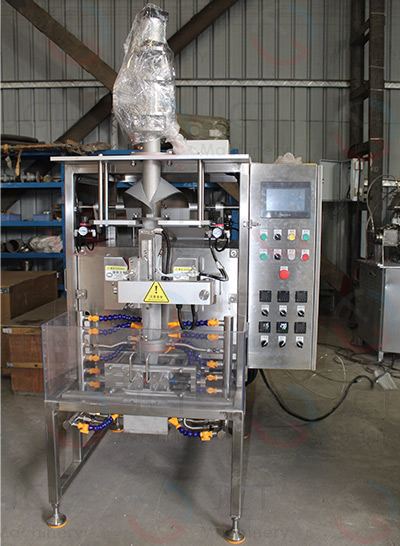
The hot melt glue pillow packing machine is the key equipment used to package molten adhesive into pillow-shaped packs.
After the adhesive has been mixed and heated, it is transferred through a heated pipeline to the filling system. The machine then meters the required quantity of adhesive into packaging film and completes the forming, sealing, and cutting operations according to its design.
| Component | Function |
|---|---|
| Heated feeding system | Delivers molten adhesive to the filling unit. |
| Metering and filling unit | Controls the amount of adhesive dispensed into each pack. |
| Film feeding system | Supplies packaging film. |
| Forming unit | Forms the packaging film into pillow-shaped packs. |
| Sealing unit | Seals the package to prevent leakage. |
| Cutting unit | Separates individual packages. |
| Temperature control system | Maintains suitable operating temperatures. |
| Finished product conveyor | Transfers packaged products for subsequent handling. |
When selecting a pillow packing machine, manufacturers should confirm:
The filling and sealing system must be compatible with the adhesive's temperature and flow characteristics. Packaging trials are recommended to verify filling accuracy, sealing performance, and package integrity.
A complete production line connects raw material preparation, mixing, heating, transfer, filling, and packaging.
A typical manufacturing process is:
Before requesting a turnkey production line quotation, manufacturers should prepare the following information:
| Project Information | Details to Confirm |
|---|---|
| Adhesive type | EVA-based, PO-based, rubber-based, or other formulations. |
| Raw material condition | Powder, granules, blocks, or liquid. |
| Production capacity | Required output per batch or per day. |
| Mixing requirements | Viscosity, processing temperature, and mixing time. |
| Package weight | Required adhesive weight per pillow pack. |
| Packaging material | Film type, thickness, and roll dimensions. |
| Packaging speed | Required number of packs per minute. |
| Automation level | Manual, semi-automatic, or automatic operation. |
| Factory conditions | Available space, utilities, and production layout. |
The mixer, heating system, transfer pump, and pillow packing machine should be matched according to the required production output. An undersized filling system may restrict the overall line capacity, even when the mixing equipment can produce more adhesive.
A turnkey supplier should be able to evaluate the complete manufacturing process and configure the mixing, heating, transfer, and pillow packaging equipment as one coordinated production system.
JCT Machinery is a mechanical equipment manufacturer founded in 2006. Its main products include sigma mixers, kneaders, double planetary mixers, and reactors. The company also provides customized equipment and turnkey production line projects for adhesive and resin applications.
JCT Machinery has a factory area of approximately 3,000 m² and an operations and promotion center of approximately 500 m². The company has 7 CE certifications and 12 patents.
Customers evaluating a production line project can take several practical steps before placing an order:
For pillow-packaged hot melt glue production, the pillow packing machine is just as important as the mixer. The entire system should be evaluated together to ensure that material preparation, heating, transfer, filling, and sealing can operate in a coordinated way.
A hot melt glue pillow packing machine is used to meter molten adhesive into packaging film and form, seal, and cut individual pillow packs.
A sigma mixer or kneader is commonly considered for high-viscosity hot melt adhesive formulations.
Yes. The adhesive generally needs to be maintained at a suitable filling temperature to ensure proper material flow and filling performance.
Yes. JCT Machinery can provide customized turnkey production line projects for adhesive manufacturing applications.
Yes. Customers can arrange a factory visit or video inspection and send raw materials to the factory for mixing trials.
Technical Support: Magic Lamp - Website


 Home
 +86 18138373963
 jctben@mixmachinery.com


