
Leading Glue Production Line Equipments Manufacturer.
Tel: +86 181 3837 3963 | jctben@mixmachinery.com
Tel: +86 181 3837 3963 | jctben@mixmachinery.com

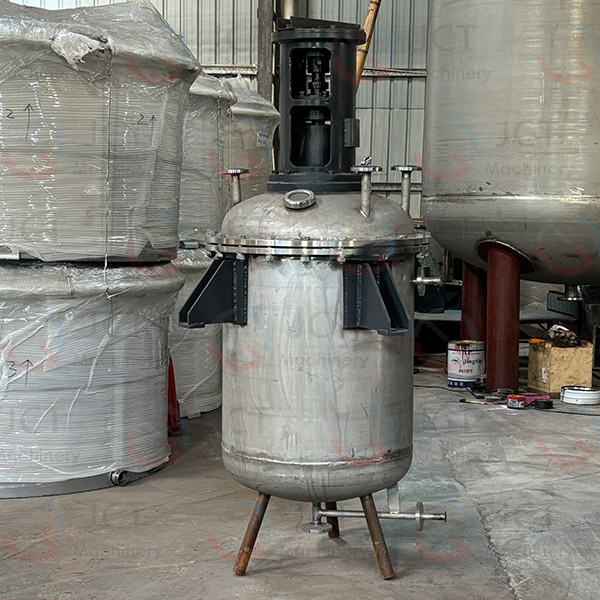

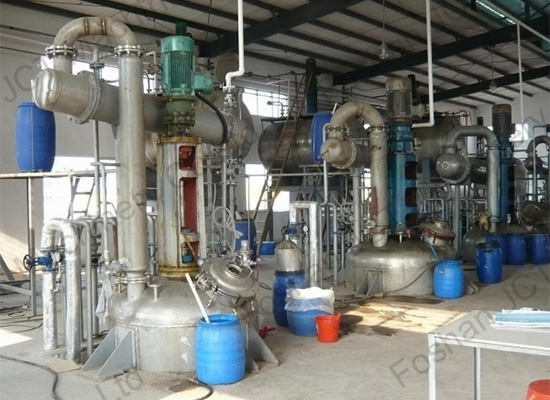


1. Preparation and dissolution: Add deionized water and polyvinyl alcohol (PVA) to the reactor, heat and stir until completely dissolved.
2. Monomer emulsification: Add emulsifier and some monomers (such as vinyl acetate, VAE).
3. Polymerization reaction: Add initiator and the remaining monomers in batches, controlling the reaction temperature (usually between 75 and 85℃).
4. Post-treatment: After the reaction is complete, cool down and add plasticizer, preservative, defoamer, and pH adjuster.
5. Filtration and filling: Remove impurities through a filter and proceed to the filling line.
Q: What types of wood glue can this production line produce?
A: Our production line is highly compatible. By adjusting the reaction process and formulation, you can produce white glue, D3/D4 grade water-resistant woodworking adhesives, engineered wood glue, finger joint glue, and vacuum forming glue. Our one-stop solution covers all production needs from basic consumer to industrial-grade high-performance adhesives.
Q: If I don't have a chemical engineering background, can you provide formulation support?
A: Yes. We not only provide equipment, but also complete production process solutions. This includes mature chemical formulations, raw material selection guidance, and standardized operating procedures (SOPs) for the feeding sequence. Our goal is to ensure that our customers can quickly produce qualified products that meet market standards after equipment installation.
Q: Do you provide overseas on-site installation and engineer training?
A: Of course. We have a team of experienced technical engineers who can provide global on-site installation and commissioning services. We will provide on-site guidance to your staff on operating the equipment, maintenance, and trial production of the first batch of products.
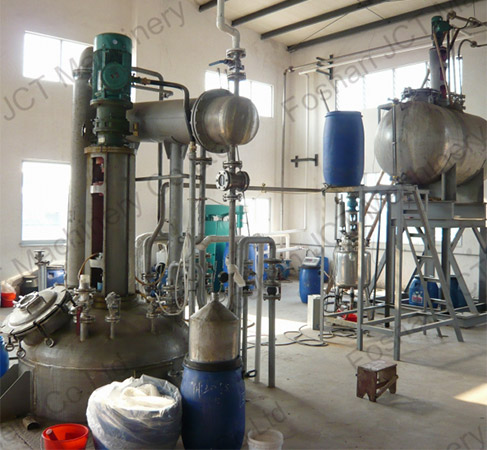
Q: How much space is needed to set up a wood glue factory?
A: Space requirements depend on your daily production target (e.g., 5 tons/day or 20 tons/day). Once you confirm your purchase intention, our engineering team will design a free 2D floor plan based on the actual dimensions of your factory, rationally planning the reaction area, mixing area, filling area, and finished product warehouse to maximize space utilization.
Technical Support: Magic Lamp - Website


 Home
Home

 +86 18138373963
 jctben@mixmachinery.com


